
Standby generators: built for convenience
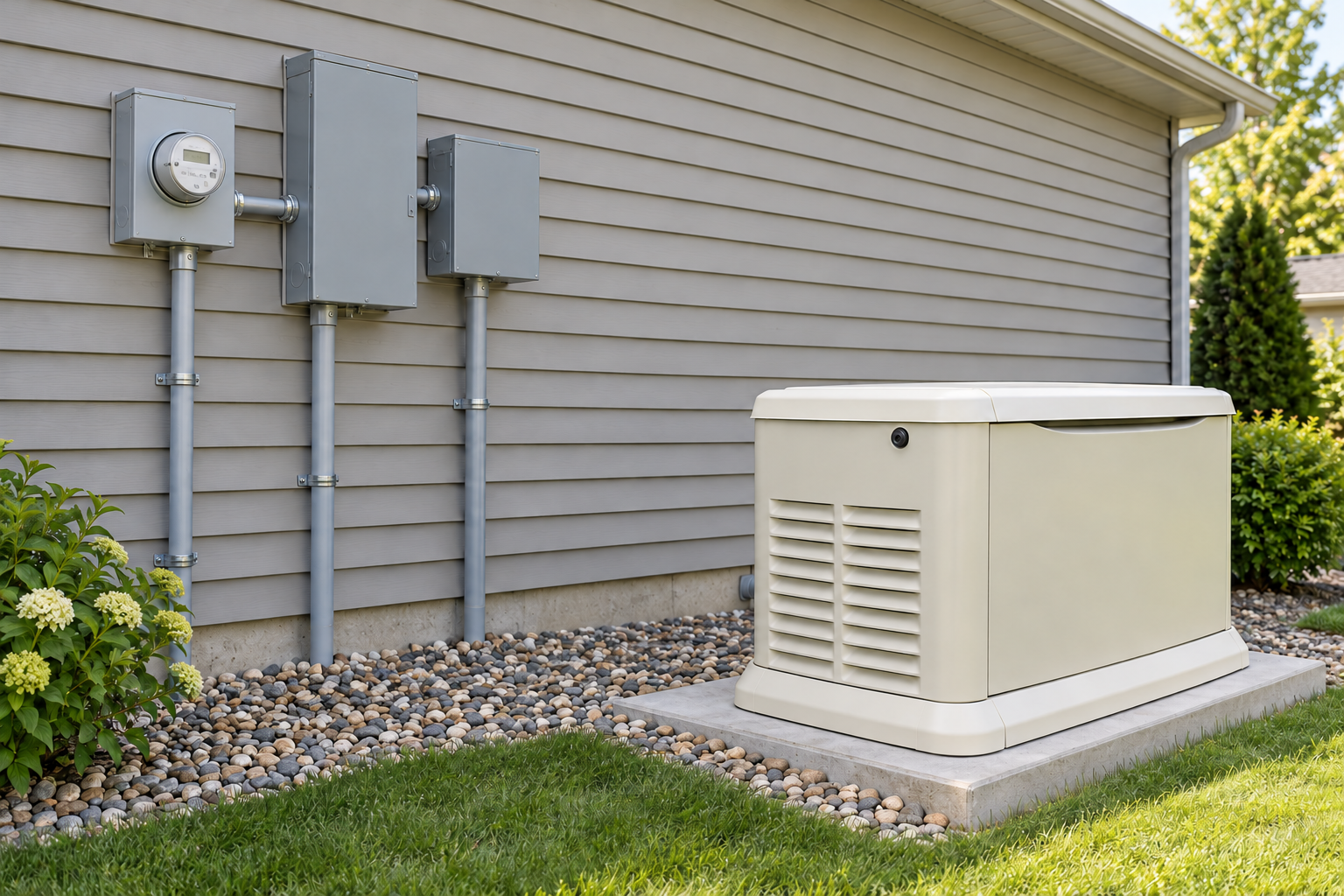
A permanently installed standby generator can start automatically and transfer selected loads through an automatic transfer switch when utility power fails. Proper sizing and load management determine what it can power. Natural gas or propane supply can avoid the repeated portable generator setup.
- Automatic operation is available, including when you are away
- Permanent installation with planned circuits and fuel supply
- Higher initial cost and a longer installation process
- Requires ongoing maintenance, suitable clearances and a reliable fuel supply
Interlock and inlet: use your portable generator
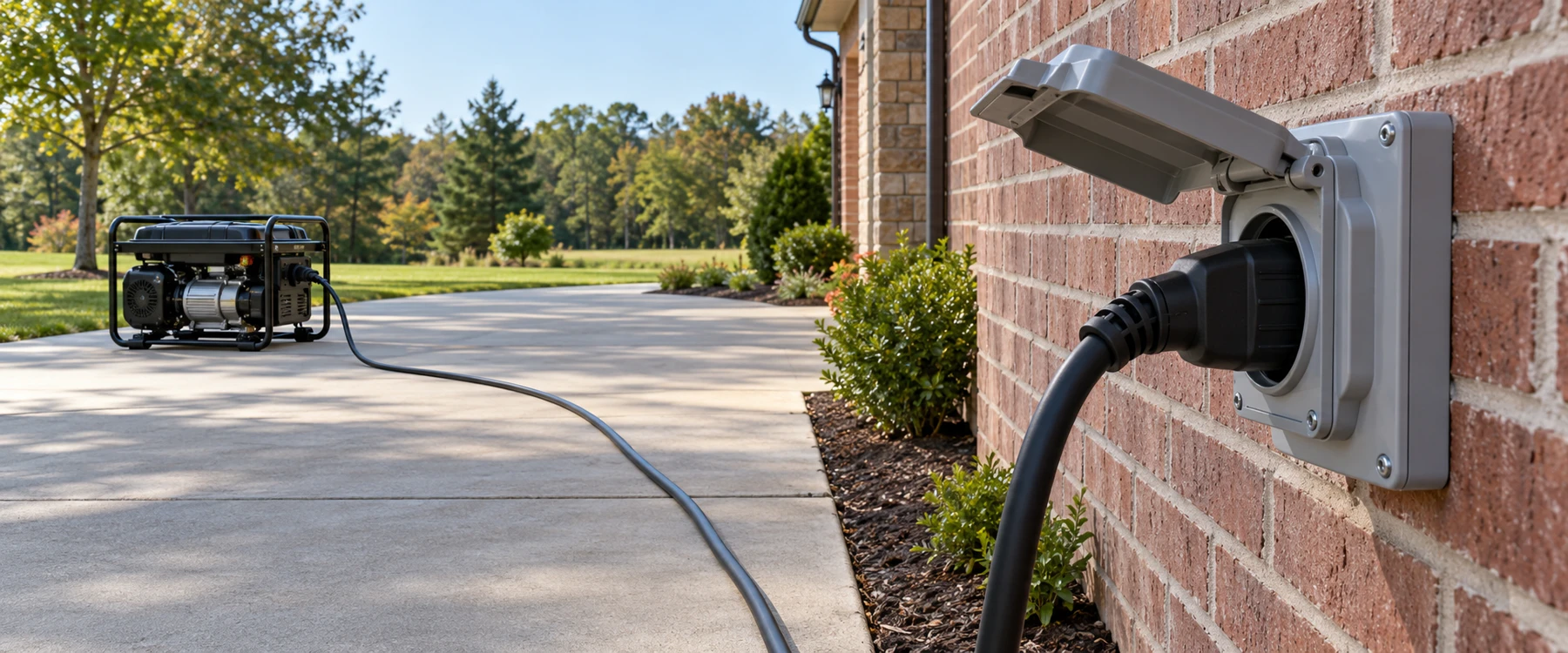
A compatible panel interlock mechanically prevents the utility main and generator breaker from being on together. A professionally installed inlet provides the generator connection. This is often a cost effective choice for occasional outages when you already own a suitable portable generator.
- Generally lower installation cost than a standby system
- You supply the compatible portable generator and connection cord
- Requires manual setup, fuel planning, switching and load management
- Panel compatibility, generator neutral configuration and local approval must be checked
Is this the same as a transfer switch?
People sometimes use “transfer switch” as a general description of generator changeover. A panel interlock and inlet is a different arrangement from a separate manual transfer switch. We often recommend an interlock/inlet for a compatible portable setup, but it is not the best fit for every panel or jurisdiction. A dedicated transfer switch may be preferable in some installations.
Safe operation is part of the plan
We explain the installed system’s operating procedure and capacity limits. Never connect a generator through a household outlet or use a cord with exposed male plugs at both ends. Run portable generators outdoors, at least 20 feet from the home, with exhaust directed away from doors, windows and vents. Working CO alarms remain essential.